
Feed Systems Automation of assembly processes normally pursues three objectives: efficiency enhancement, quality improvement and cost reduction. To achieve these objectives, the supply of fasteners must be trouble-free and as gentle as possible on the material. WEBER, with its automatic feed systems, achieves a maximum of process quality. The development of these systems requires experience and know-how. WEBER has developed and manufactured individual components for many years, combining them to fully automated feeding systems. After currently more than 30,000 delivered screwdriving and assembly systems with automatic feeding, WEBER is one of the leading companies in this area.
Product
Feeding systems
Our feeding systems overview
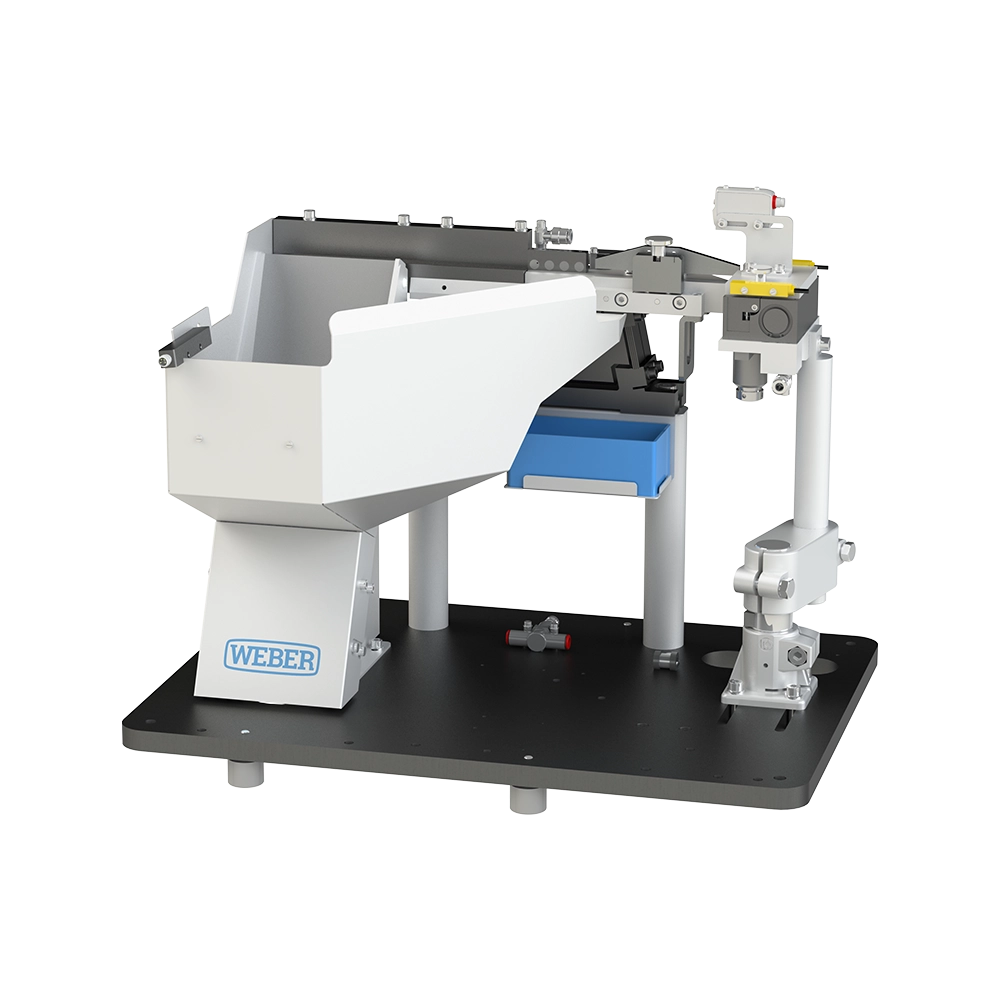
Step feeder ZEL240/360
- Parts gentle conveying with little abrasion for technical cleanliness
- Very low noise emissions
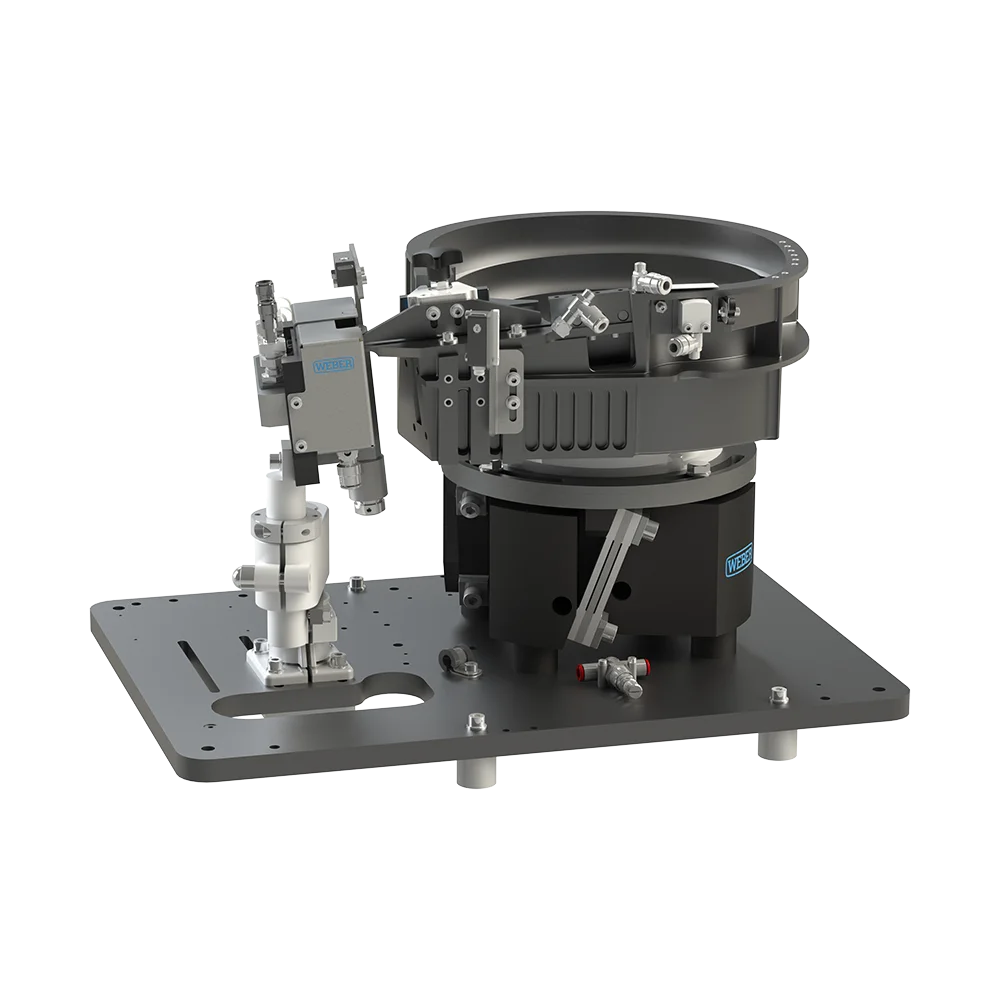
Bowl feeder ZEB
- Conveying small screws
- Robust system even for difficult environments
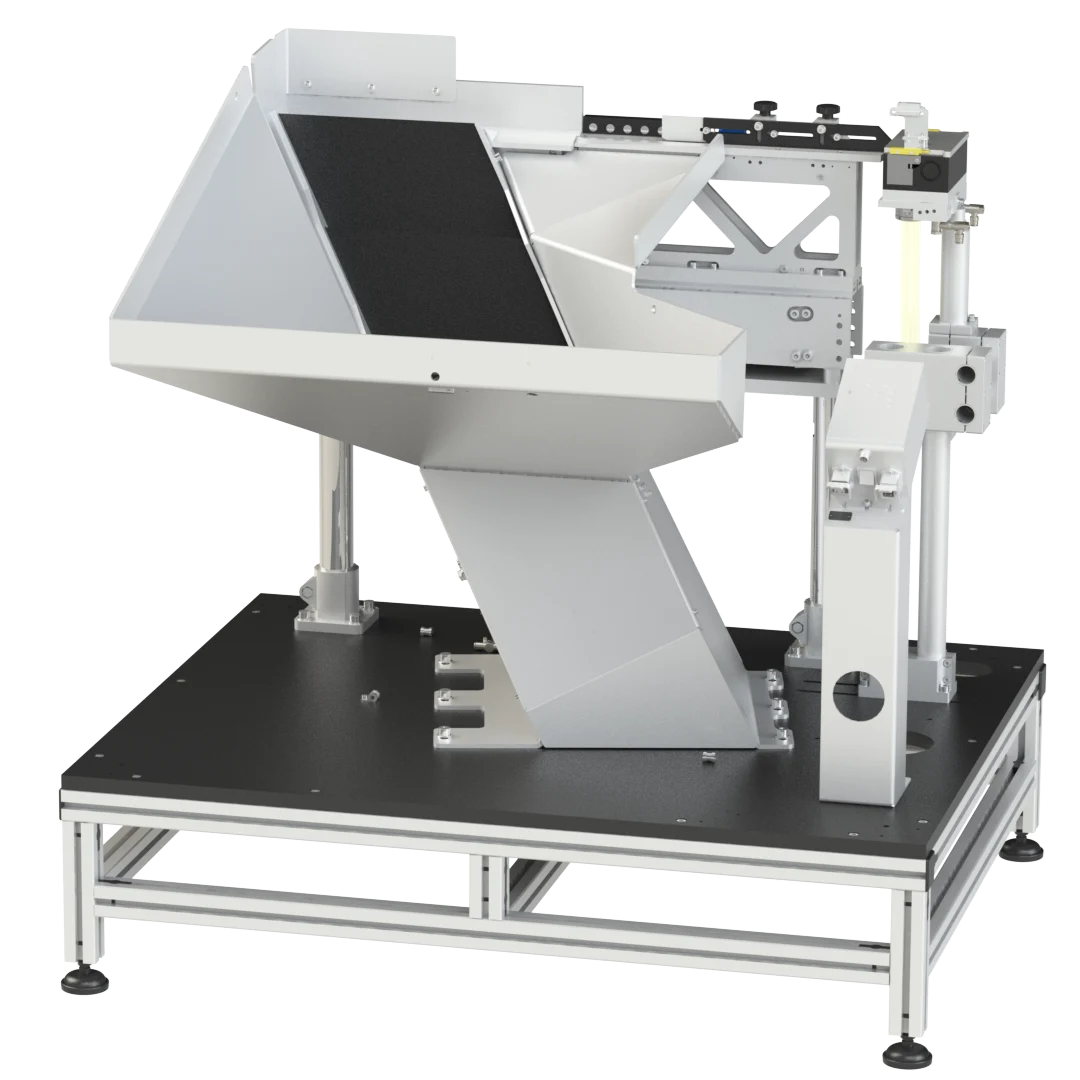
ZEL480 step feeder for large screws
- Designed for large-format elements (screws up to 160 mm)
- Pick-and-place for especially large elements

Further information on feeding system technology
Feeding system ZEL Step feeder
The step feeder ZEL feeds screws, nuts and pins and is gentle on the material. The system allows cycle rates as low as 0.8 seconds. The stepwise supply of parts enables processing of surface-coated and sensitive parts. Integrated sensors ensure high process reliability.
Feeding system ZEB Bowl feeder
The model ZEB is suitable for sorting, conveying and transport of an entire range of fasteners. Screws, nuts, pins, washers, caps and special elements are fed gently from the hopper to the screwdriving spindle. A noise-insulated vibration mechanism provides for the propulsion.
ZEL480 step feeder for large screws
The ZEL480 is specifically designed for feeding large-format screws, nuts and pins. As a robust feeding unit, it supports OEMs and system integrators in achieving safe and efficient automation. Technically optimized for performance, flexibility, and accessibility.
Frequently asked questions about feeding systems!
What are the advantages of the step feeder?
The step feeder offers the great advantage of transporting the fasteners quietly and gently. This is an important factor especially with respect to technical cleanliness.
Up to which cycle rate can elements be fed?
Fasteners such as screws/bolts, pins and nuts can be fed with a cycle rate of up to 0.8 seconds, depending on the fastener and the length of the feed hose.
At what speed are the screws fed?
Maximum feeding speed 10 m/s.
Which elements can be automatically fed?
Bolts/screws, nuts, pins, washers, caps and many other elements can be fed.
What are the advantages of an automatic feeder?
Automatic feeding of the fasteners saves time for the reloading movements, e.g. for pick & place applications.
How is the feeder controlled and monitored?
The feeding unit is monitored and controlled with a PLC. OK and NOK signals from the sensor system installed on the feeder are processed in the PLC. Examples for this are fill level and lead-in checks and position indication for the actuators.
How can the autonomy of the automatic feeder be maximized?
A hopper can be used to extend autonomy until the next top-up of the fasteners. Hoppers have a 10 times higher fill volume compared to feeding units.
Can one feeder supply multiple screwdrivers?
A distributor can be used so one feeder can supply multiple screwdriving or setting systems. The maximum number of systems depends on the cycle time.
How does an automatic feeder work?
In the first step, the fasteners are stored in a bowl, then sorted into the correct orientation using different technologies, separated and blown through a hose with air.
WEBER Schraubautomaten
WEBER Schraubautomaten GmbH is a family-run and innovative company that attaches great importance to the sustainable design of the value chain. The result is high-quality products with maximum process reliability that make production processes more efficient. Your success is our success.